


Have you ever had a client unexpectedly leave?
You think everything’s going well, and the next day they’re gone.
It’s frustrating, and directly impacts your revenue. And if you’re like most of us, by the time you realize a client is about to leave, it’s already too late to turn things around.
Churn sounds a little ominous, it’s when customers decide to move on from your service.
Sometimes it feels like it can sneak up on you, but churn isn’t a surprise. The signals are there in your data, you just need to know where to look.
Businesses often miss churn indicators not because they’re hidden but because they’re not being analyzed effectively.
But what if it didn’t have to be that way? What if you had the ability to catch the subtle signs of churn before it happened, giving you the chance to intervene and keep that revenue within reach?
We’re not talking about a crystal ball here, but rather a data-backed approach that can signal risk factors well before a client decides to leave.
In this article, we’ll explore how spotting churn risk early can help you manage your accounts smarter. You’ll see why waiting to address churn when it’s visible might be costing you more than you think.
Identifying the Real Signs of Churn
Churn rarely happens without warning.
More often than not, clients give off subtle signs that they’re starting to disengage. The trick is knowing what to look for so you can act before it’s too late.
Let’s break down a few of the most telling signs:
- Declining Activity: If a client stops logging in as often or skips key features they once relied on, it can be the first signal of trouble. Think of a drop-off in activity as a slow fade; it’s easy to overlook but a red flag for churn.
- Missed Meetings and Silent Feedback: When clients start rescheduling or missing meetings, or if they go quiet on feedback, it’s time to investigate. Silence can be as telling as negative feedback, it signals that your product/service might no longer be top of mind.
- Change in Tone: This one’s a little harder to measure but no less important. Has their tone in emails shifted? Are they less responsive or polite but distant? These shifts often hint at dissatisfaction, and they’re easy to miss if you’re not tuned in.
These signals can be subtle, which is why many teams miss them until it’s too late. But having an easy way to track them can mean the difference between saving a client and losing revenue. In the next section, we’ll dive into why waiting to react costs more than you think.
The Hidden Cost Of Reacting To Churn
Let’s talk about the cost of waiting until the last minute.
When you’re only reacting to churn, rather than preventing it, you’re often stuck in damage control mode. And it’s not just frustrating, it’s expensive.
Reaching out to a client when they’re already half-way out the door is like fixing the roof after it’s already started raining. By then, the damage has started.
Late-stage attempts to salvage a client relationship can feel rushed or insincere, which may damage the relationship more than it repairs it. Clients, just like you and me, can tell when they’re suddenly a priority just because they’re on the way out. It’s the same feeling people have when their employer will suddenly shell out for the raise they “couldn’t afford” once you’ve handed your notice in.
Now, let’s look at the actual costs.
First, there’s the immediate hit to your revenue if the client leaves. Then there’s the cost of replacing them. Studies show it costs up to 7x more to acquire a new customer than to retain an old one. Plus, if your team is busy putting out fires with unhappy clients, they’re spending less time building relationships with your loyal customers, risking even more churn.
And if that wasn’t enough to open your eyes, increasing customer retention by 5% increases profits by 25-95%. Due to the acquisition cost for new customers, profit margins take much longer to be realized than with existing customers.
So how do you fix it? Proactively address churn risks in your pipeline by spotting them early.
When you know the early signs of churn, you can address potential issues calmly, professionally, and on your own terms. Stop scrambling to save revenue at the last minute, and show clients that you’re there to support them long before things go south.
In the next section, we’ll look at how SalesMethods new tool, Plan2Renew, makes it easy to keep churn under control by giving you the right data, when you need it.
Prevent Churn with Plan2Renew
Preventing churn is essential for stable revenue. When clients fail to renew, it creates a ripple effect that can disrupt growth and destabilize your plans. Plan2Renew (P2R) addresses these challenges by transforming renewals from a reactive scramble into a strategic, predictable process.
With P2R, your team can detect renewal risks early through real-time “Plan Risk” insights that quantify the likelihood of a client’s renewal. Each account is analyzed across key indicators, like relationship strength, which help your team see not just if a renewal is at risk, but why.
By flagging issues such as drops in engagement or changes in relationship quality early on in the renewal process, P2R provides actionable insights that allow your team to proactively address client concerns before they escalate into churn.
Securing renewals shouldn’t be a constant worry for your business, but should present an opportunity for growth.
With tailored insights into client needs and potential risks, your team can confidently engage at-risk accounts with targeted retention strategies, reducing churn and securing revenue predictably.
Plan2Renew In Action
So how does this actually work in practice? Let’s review some real life examples.
Early Risk Detection
Imagine a high-value client shows a steady decline in platform usage over the last quarter. If this goes unnoticed, they could churn.
With Plan2Renew’s dynamic “Plan Risk” graphic, this kind of decline is flagged immediately, enabling your team to address the issue proactively.
Equipped with these insights, your team can reach out to discuss any changes in the client’s needs, rather than waiting until renewal time to find out the customer isn’t satisfied.
Renewal Strategy
Consider a case where a client expresses hesitation about renewing because they feel the solution no longer aligns with their needs.
With P2R’s data, your team can examine detailed client insights like feedback trends, usage metrics, and previous support interactions. Instead of making a generic renewal pitch, they can present a tailored strategy. Your team can shift the renewal conversation from justification to value demonstration.
Smooth Account Transitions
Client relationships often suffer when account managers change roles or leave the company, but P2R mitigates this risk by centralizing account data in one accessible platform.
When a new team member takes over, they have immediate access to the full context of the account. This smooth transition minimizes disruption for the client, reassuring them that they remain a priority even during internal changes.
Strategic Upsell Opportunities
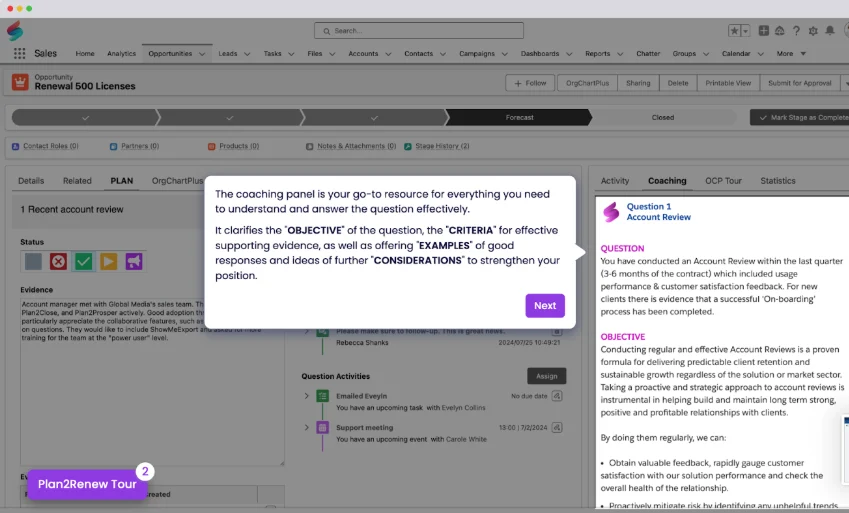
Plan2Renew goes further than just retention, it helps your customers grow with your solution. P2R’s coaching panel encourages your team to identify upsell and cross-sell opportunities that align with the client’s goals.
For example, during a quarterly review, the team may uncover that the client’s needs have shifted toward more advanced features. By recommending relevant add-ons or higher-tier services, your team can support the client’s growth objectives while boosting renewal value.
In each of these scenarios, Plan2Renew turns churn prevention into a structured, data-driven process that ensures your team is always one step ahead.
Instead of reacting to churn, you’re engaging clients in ways that secure renewals.
A Smarter Approach to Retaining Revenue
By now, it’s clear: waiting for churn to become visible is a costly approach.
But with the right tools, you can stay ahead, addressing potential issues before they escalate. Plan2Renew equips you with the insights, collaboration, and strategic planning capabilities to make churn prevention a natural part of your account management.
Each feature works together to give you a deeper understanding of your clients and a proactive approach to supporting their goals. Instead of reacting, you’re strengthening relationships, and showing clients that their success is your priority.
It’s a smarter, more sustainable way to keep revenue steady and clients happy.
What are you waiting for?
If you’re ready to move from a reactive to a proactive approach, Plan2Renew is here to help. With tools that make churn prevention part of your everyday strategy, you’re set up to retain clients, and grow revenue.