


Success in sales is directly connected to how well you manage stakeholder relationships. But here’s the catch: stakeholder management is rarely straightforward.
Juggling conflicting interests, navigating hidden power dynamics, and ensuring your entire team communicates consistently, all while trying to close deals quickly can get messy.
When you lack a clear view of who holds the power, who influences decisions behind the scenes, or how different stakeholders interact, you’re operating with blind spots. These blind spots can lead to missed opportunities, wasted efforts, burned bridges, and even lost deals.
But what if you could cut through this complexity? What if you could see the entire landscape of stakeholder relationships clearly and make informed decisions based on a complete understanding of the dynamics at play, with automatic updates as people move and change roles?
That’s the power of visualizing stakeholder relationships.
It’s not just a nice-to-have; in sales today, it’s a necessity. In this blog, we’ll explore why this is so crucial and how it can transform the way you manage your sales efforts.
Driving Revenue Through Relationships
Even in B2B sales, people don’t sell to an organization, they’re selling to other people. Understanding the relationships behind the scenes is usually one of the first things sales people do when they start prospecting or working with a new account.
Sales people want to quickly identify the following stakeholders:
- Decision Maker: Who will ultimately decide which tool is chosen?
- Signatory: If this person is different from the decision maker, who will actually sign the contract?
- Champion: Who will influence the decision on which tool is selected, and what is their motivation for selecting one tool vs. another?
- Blockers: Who could potentially create roadblocks internally? Potentially legal or IT security?
Identifying these individuals and visualizing the hierarchy of how they all work together is crucial to be able to run an effective sales cycle. Another element to this is monitoring stakeholders job updates. It is extremely common for people to move internally into a new role or take a role externally, and having a tool that can update this information automatically is crucial to ensuring sales cycles run smoothly, even with potential disruptions.
The Value of Visualizing Stakeholder Management
Visualizing stakeholder relationships is an essential strategy that can redefine how you manage and close deals. Here’s why it holds significant value:
1. Hidden Power Dynamics
Stakeholder relationships often include influential individuals who aren’t visible in traditional org charts. These hidden influencers can have a significant impact on decisions. Without visualization, you risk missing these critical players, leading to overlooked objections or unaddressed needs that could derail a deal. By mapping out relationships, you can identify these influencers early, allowing you to tailor your approach to include their interests and concerns. This insight ensures that your strategy is comprehensive and engages all important stakeholders.
2. Utilize Resources Effectively
In any complex deal, your time and resources are finite. Visualizing stakeholder relationships allows you to pinpoint where your efforts will yield the most significant impact. This means you can allocate your resources, whether it’s time, attention, or persuasive efforts, toward stakeholders who are most likely to influence the outcome. This strategic focus not only prevents wasted efforts but also increases your efficiency, enabling you to close deals faster and with more precision.
3. Consistent Messaging
Misalignment within your team can lead to inconsistent approaches, and lost revenue. A shared visual map of stakeholders ensures that everyone, from sales to marketing to customer success, is operating from the same playbook. Imagine your business development team is targeting stakeholders in one area through cold outreach, but an Account Executive has already established a relationship with a critical stakeholder. This kind of inconsistent approach can make the prospect think your team is not very well aligned and leave a negative impression of your ability to do business.
Instead, having a single source of truth and a visual representation of the relationships at play reinforces your message and strategy across all touchpoints. When everyone on your team knows who the key players are and what their specific concerns might be, you create a unified front that’s more likely to win trust and boost sales success.
4. Address Risks
Another advantage of visualizing stakeholder relationships is the ability to anticipate and mitigate risks before they become deal-breakers. By understanding the connections and influence patterns between stakeholders, you can identify potential objections or sources of resistance early in the process, such as the InfoSec team or the legal team.
This foresight allows you to proactively address these concerns, whether through tailored messaging, additional support, or even restructuring the deal to better align with stakeholder interests. The ability to foresee and counteract potential issues reduces the likelihood of surprises and keeps the deal on track.
5. Accelerate Deal Closure
In complex sales cycles, delays often arise from misunderstandings or miscommunications about who holds the real decision-making power. Visualization cuts through this ambiguity, providing you with a clear roadmap of the decision-making process.
This clarity allows you to engage with the right stakeholders at the right time, minimizing delays caused by chasing approvals from less influential contacts. By targeting the true decision-makers, you can accelerate the decision-making process, reducing the sales cycle and increasing your chances of closing the deal.
What Does This Actually Mean for You?
1. More Revenue
You’re mid-sale. You’ve had numerous meetings, sent proposals, and followed up countless times. But the decision keeps dragging out because you’re not sure who holds the real power. Is it the CEO? The CFO? Or someone in operations who’s been quiet but influential? Without a clear understanding of the internal dynamics, your efforts are shots in the dark, wasting time and resources.
Visualization changes that. By mapping out these relationships you can focus your pitch to the specific needs and concerns of each stakeholder. Now, instead of endless back-and-forth, you’re engaging the right people, at the right time, with the right message—accelerating the decision-making process.
2. You Can Deal With Objections Before They’re Fatal
You’re about to close a deal, but out of nowhere, a key stakeholder raises a concern that you weren’t prepared for. Suddenly, a deal that seemed certain is now unstable. If only you had known about this person’s objections earlier, you could have addressed them head-on and kept the momentum going.
You can identify potential resistors by mapping out their influence and past behaviors within the organization. This process helps you anticipate objections because you’ll understand each stakeholder’s concerns, priorities, and historical resistance to similar proposals. It also helps you to know where you might need to spend a bit of extra time building relationships as well.
By knowing this in advance, you can enter negotiations prepared with relevant data, case studies, and solutions that directly address these concerns, turning what could be a deal-breaker into a persuasive argument that strengthens your position.
3. Improved Customer Experience
We’ve all been there: your sales team is pushing hard to close a deal, but the marketing materials don’t quite match up with what’s being discussed in meetings. The client starts to notice the inconsistencies, and suddenly, the confidence you’ve built begins to crumble. This disconnect can be the difference between closing or losing a sale.
By using a visual map, everyone in your organization, from sales to marketing to customer success, sees the same stakeholder landscape and understands the key concerns. This ensures that every piece of communication reinforces the same message, making your pitch stronger, more cohesive, and more convincing.
4. Quicker Approvals
How many times have you had a deal stall because you couldn’t get all the necessary approvals? You’ve done everything right, but the process grinds to a halt because you’re not sure who else needs to sign off, or how to get them on board. These delays are frustrating and can even cost you the deal.
Visualization provides clarity on the approval hierarchy. You can see who needs to be engaged and in what order, allowing you to address their concerns early and push the deal through more efficiently. No more endless waiting—just a streamlined process that gets you to “yes” faster.
5. Improved Relationship Management Post-Sale
Even after closing a deal, the work doesn’t stop. You need to manage and grow the relationship, but changes within the client’s organization—like a key supporter leaving—can disrupt your momentum. Without a clear view of the ongoing stakeholder dynamics, you risk losing the trust and rapport you’ve worked hard to build.
Visualization helps you stay on top of these changes. If a new stakeholder enters the picture, you can quickly map their influence and adjust your engagement strategy accordingly. This approach ensures continuity in your relationship management, leading to stronger partnerships and more opportunities for repeat business.
Choosing the Right Visualization Tool
When selecting a tool to visualize stakeholder relationships, it’s essential to focus on a few critical factors:
- Customization: The tool must adapt to your specific needs, allowing you to build org charts that accurately reflect your unique business structure. This means you can model complex hierarchies, incorporate specific roles, and align the tool with your sales strategies.
- Integration with Your CRM: Seamless integration is non-negotiable. Your tool should synchronize data in real-time, ensuring that all updates within your CRM are reflected in your stakeholder maps. This reduces data silos and ensures that everyone on your team is working from the same, accurate information.
- Meaningful Insights: A strong visualization tool does more than display relationships; it provides actionable insights through advanced reporting and analytics. This allows you to understand the dynamics within your accounts, monitor the health of relationships, and identify gaps or opportunities that could influence your sales strategy.
- Automatic Updates: People change jobs all the time. You probably don’t go a single week without someone in your network announcing a new job or promotion and when these updates can happen automatically in your CRM, this saves your sales people time and allows them to have the right conversations with the right people at the right time.
Why OrgChartPlus Stands Out
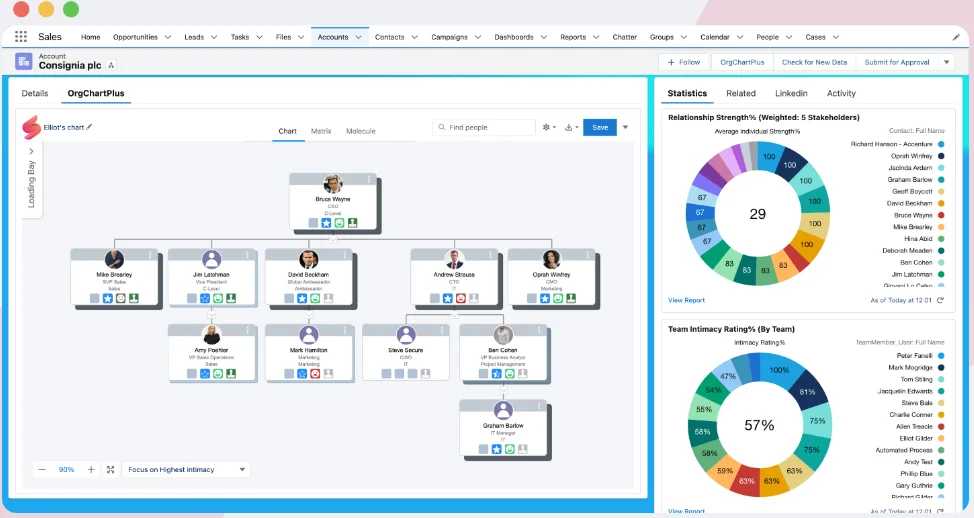
OrgChartPlus offers deep customization, allowing you to tailor charts to reflect complex organizational hierarchies and align with your business needs. Whether you need to edit contact card attributes, adjust visual elements, or implement specific templates for different teams or regions, OrgChartPlus adapts effortlessly to your sales process.
As a Salesforce-native tool, OrgChartPlus ensures that your data is always synchronized in real-time and never leaves the security of the Salesforce platform.
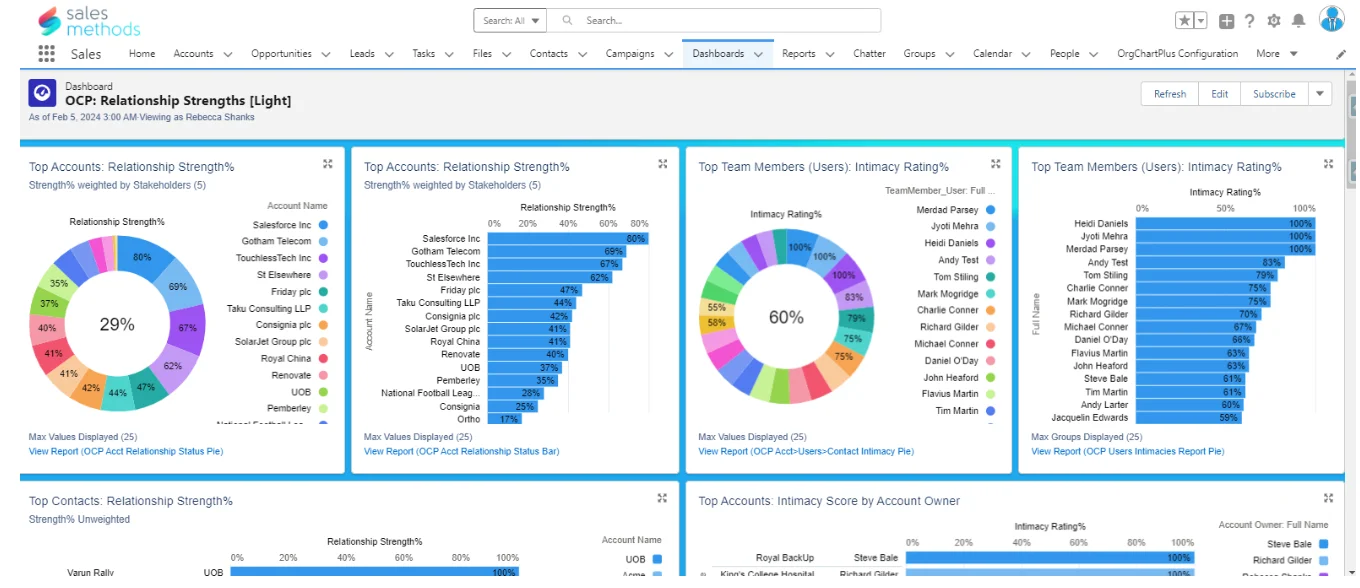
You can view out-of-the-box reports and dashboards that deliver actionable insights into account health and relationship dynamics. You can easily track opportunity scores, manage adoption, and keep your sales strategy aligned with up-to-date customer information.
The way you manage them will be transformed making it an indispensable tool for sales teams using Salesforce.
Don’t just take it from us, check out Salesforce Bens App Assessor here!
Summary
Managing stakeholder relationships effectively will help you close more deals. Visualizing these relationships helps you uncover hidden influencers, focus resources where they matter most, maintain consistent messaging across teams, and accelerate your sales cycle. By understanding the complete landscape of stakeholder dynamics, you can anticipate challenges, align your team’s efforts, and move deals forward with greater confidence and efficiency. Effective stakeholder management is no longer optional, it’s essential for success in today’s sales environment.
Easily create detailed org charts for specific opportunities, even when dealing with complex relationships. OrgChartPlus makes it simple to manage intricate stakeholder dynamics, providing clarity and efficiency when handling large opportunities.
Start your free trial today to experience how OrgChartPlus can improve both your sales process and your understanding of stakeholder relationships.